
Many quotes—like memes and sayings on inspirational posters—are forgettable. This one has stayed with me.
“In the end, everything will be OK. If it’s not OK, it’s not the end.”— Most often attributed to John Lennon
I first encountered this quote outside the office door of a business partner in Düsseldorf, Germany, nine years ago. I was an executive with a technology company based in India, where I had product engineering responsibility for a software portfolio serving the telecoms industry.
Despite the usual day-to-day dramas that come with corporate life, I rather enjoyed that time. Everything was generally “OK”, and I wasn’t fixated on any particular “end.” I dutifully hummed along, touching down in more than 30 countries over a decade, pitching my products in places as diverse as Egypt, Bulgaria, and Australia.
Everything was OK, until it wasn’t.
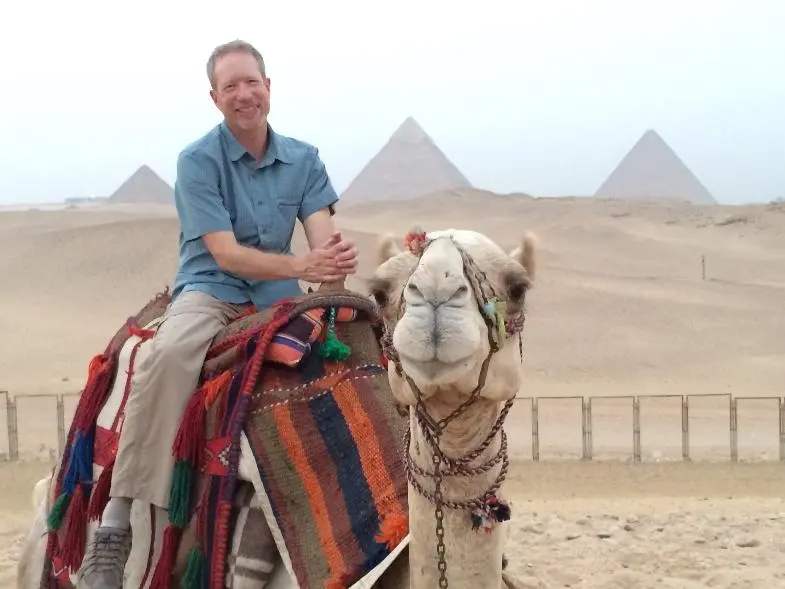
Within view of the pyramids in Giza, not long after the “Arab Spring.” This turned out to be an unsanctioned and probably ill-advised DIY “tour” during a business trip. I’ll leave that story for another time.
A Time to Reset and Recenter
The pandemic was a double whammy. Yeah, the whole business-travel-morphing-into-Zoom-calls thing was a bit of a bummer. Can’t really complain about that. But COVID hit right around the time I turned 60. That prompted a period of self-reflection. I’d been working without a gap in my CV for 35 years. I might have been tempted to retire, but an ill-fated business venture in the early 2000s lightened my nest egg enough to press pause on that idea.
With the help of a supportive HR manager, I crafted a sabbatical in a company that didn’t have a sabbatical policy. Seven months to reset and recenter. I leaned heavily into volunteerism, reading, and honey-dos.
An idea that had been sitting on the sidelines for years came back into focus. Qrati, my startup, was born.
Our University of Calcutta Roots
In truth, it really started in 2017 as a side project. Several times a year, I visited the Bangalore, India HQ of the company where I was employed. I began to take side trips to Kolkata, where I had been introduced to faculty and scholars at the University of Calcutta. I recruited several recent computer science graduates with advanced degrees, and we played around with apps and early versions of AI models in the academic domain of visual sentiment analysis.
It wasn’t a business yet, just a vision of one.
After my sabbatical, I decided not to return to the office as a full-time employee. I consulted for a while, then took a leap of faith and went all in on Qrati.
Deep Into the West Bengal Jungle
West Bengal, India, is a vibrant place with an intricate social fabric and ancient traditions that can feel almost impenetrable to Westerners. It’s the epicenter of Durga Puja, a UNESCO World Heritage festival that consumes the region for ten days each autumn. West Bengal is the home of the Qrati team (currently five members) and is very much my happy place. I travel there from my Superior, Colorado home at least once each year for team building, workshops, and social outings.
In October 2022, the team chose Aruni Ashram as our team-building location. This is not a fancy yoga retreat where foreigners in Prana attire meditate and receive spiritual guidance from a central-casting yogi. Lodging and facilities are quite basic, while rustic beauty and charm are in abundance. It takes a five-hour drive through rural India, deep into the heart of the West Bengal jungle, to reach Aruni. I was the first American who ever set eyes on the place.
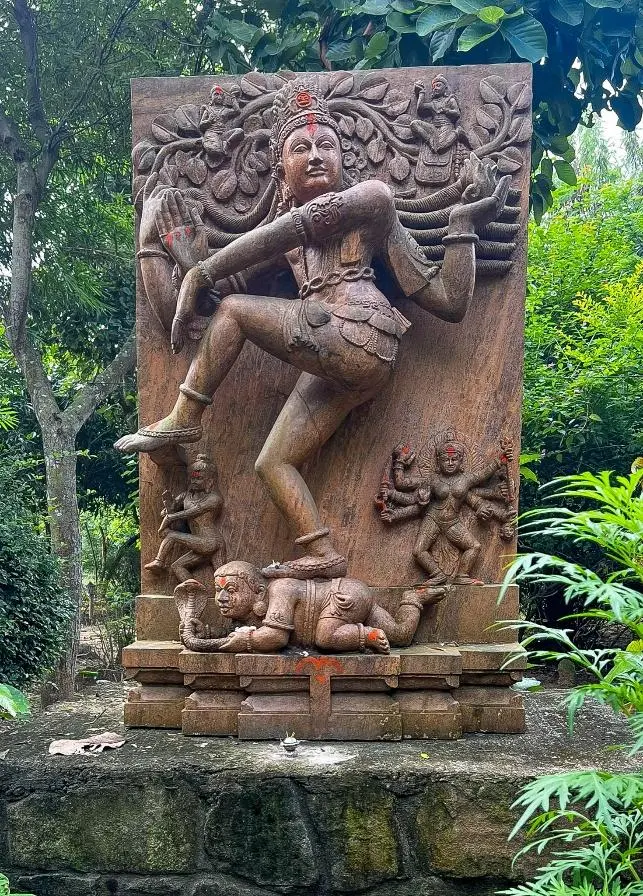
Sculpture of the Dancing Shiva on the grounds of Aruni Ashram
Qrati takes Flight
While on this trip, I was asked by a client (for whom we had been delivering some custom software services) if Qraticould adapt our nascent photo hosting platform for a use case requested by Ohio State University. We would need to do this without using an app and with integration into the client’s OSU fan loyalty site.
Our office became the outdoor dining area, and desks were wooden picnic tables, where we hunched over laptops and wrestled with spotty Wi-Fi.
And we delivered!
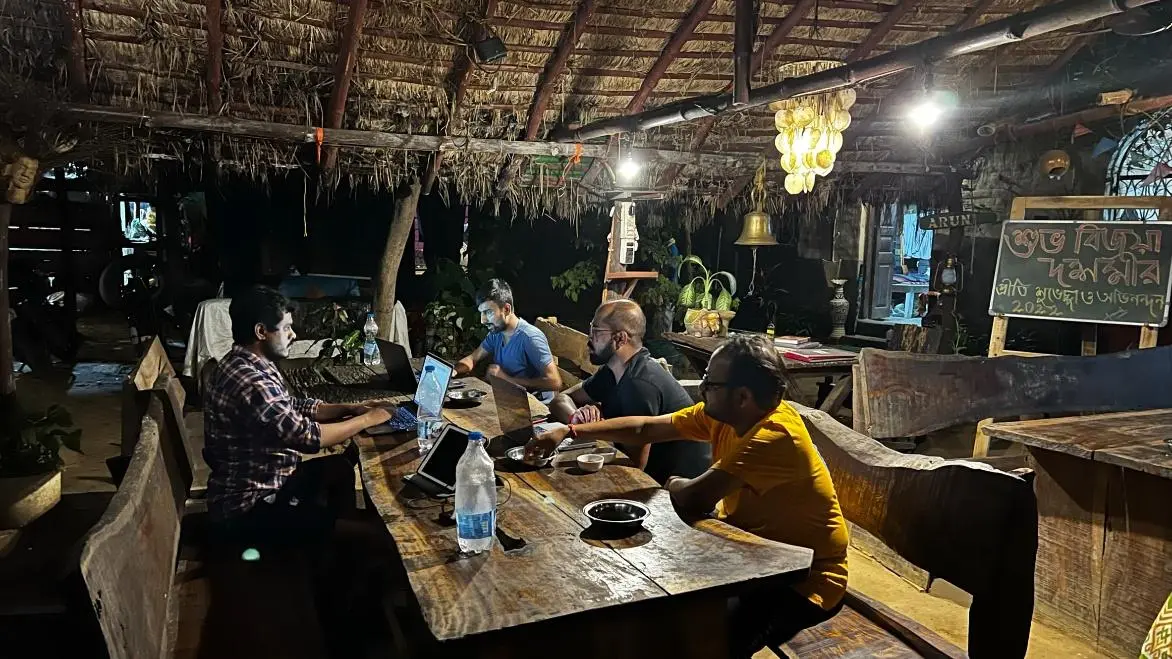
Our “office” in the dining area of Aruni Ashram. Oct 2022.
Reimagining Media Sharing
Since that time, for a little over three years, Qrati has been in public beta. Our team has been intact this whole time, with one new addition (a marketing specialist) this past January.
I feel fortunate that Qratihas some of the most talented engineers I’ve ever worked with—which is not a trivial statement given my experience at MCI (a telecom pioneer from back in the day) and Level 3 Communications (which helped give birth to the Internet as we know it today). Sid, Chiru, Prem, and Gourab are passionate, creative, and almost inhumanly industrious. From their keyboards, one of the most advanced photo-sharing platforms anywhere has taken shape.
Three years of experimentation, innovation, and refinement
- Hosted over 500 events
- Showcased more than 15,000 photos and videos
- Gathered and displayed user content for chambers of commerce, sporting events (amateur and professional), community festivals, non-profits, conferences, and more
- Promoted brand engagement with user content for M&M Mars, Hudsonville Ice Cream, and other national brands
- Supported alumni and fan loyalty programs for Ohio State, Nebraska, and other major universities
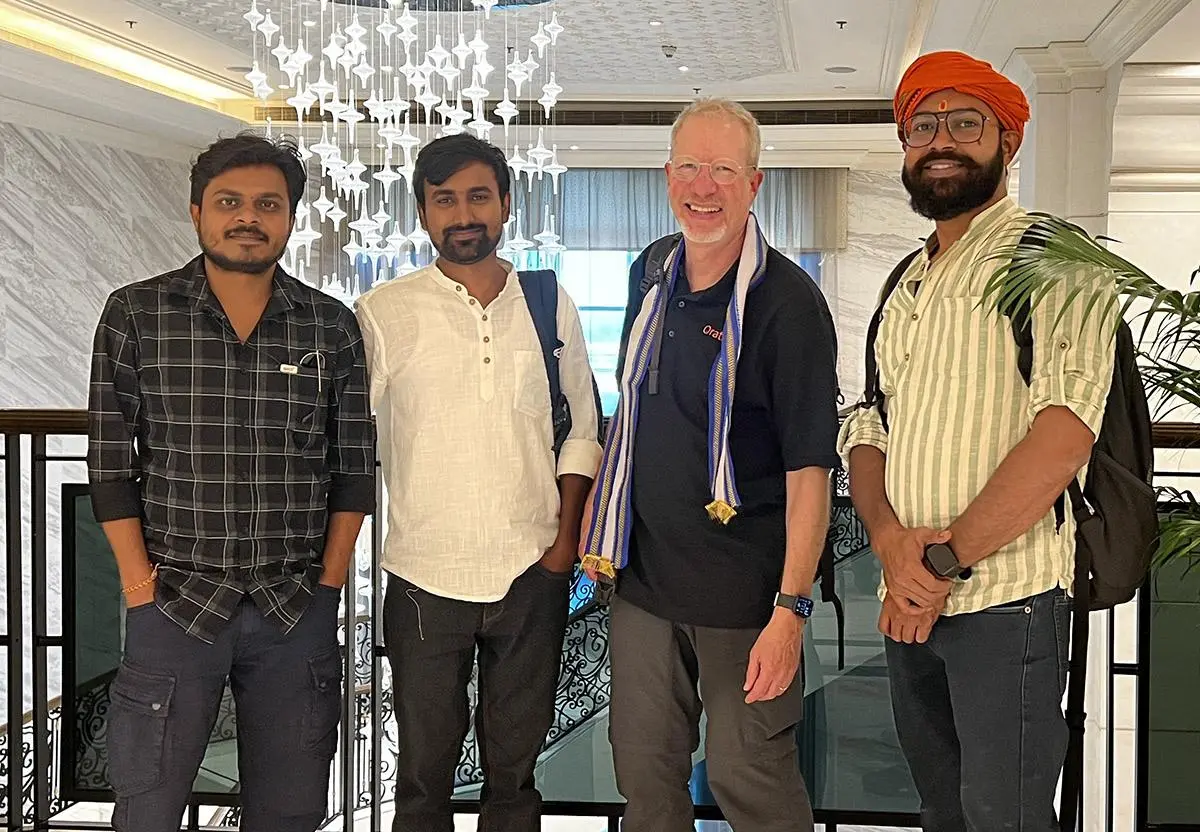
Qrati team — Sid, Prem, Andy, and Chiru. Kolkata, India. Nov. 2024
Breaking the Chains of Social Media
As we close our public beta chapter, Qratiis poised to disrupt a market segment that doesn’t get much attention, yet is ripe for reinvention—hosting user-generated content (UGC) for public and private events.
In particular, authentic UGC is harder to collect as trolls and bots blanket social media feeds and AI-generated content becomes more pervasive—and pernicious. It’s kind of a five-alarm fire out there and I see Qrati as the fire department!
I hope I’ve piqued your interest on this topic as I plan to talk about it… a lot… in future posts.
Additionally in future posts, I’ll share more about my entrepreneurial experience—along with lessons learned and a helping of advice for my fellow 60-plus entrepreneurs. I’ll also expand on our vision for Qrati and how we hope to help make the world an ever-so-slightly better place—by using AI to help amplify real human experiences, not make them up.
Oh, and I’ll explain what the heck “ Qrati” means…